Color In Interior Design
October 5, 2020Whether you’ve just purchased a new house or want to upgrade your current home, the easiest and most cost-efficient way to do so is by adding some color. It sounds easy enough but when it comes to choosing paint colors things can get a little more complicated.
When it comes to color there are two main focuses, other than personal preference, and those are color psychology and theory. Color psychology deals with a person’s mood and the effects certain colors have on us. Theory deals more with what looks good and which colors go well with one another.
Psychology of Color
Color psychology has been described as ” the study of hues as a determinant of human behavior.” Because of this, there is a reason that you often see only certain colors advertised for specific rooms. Very rarely will you see bright orange and bright yellow in your bedroom as this could keep you awake all night!
A quick breakdown of some of the most popular colors include:
- Red: Depending on the shade, red can emote feelings of everything from energy to passion to war to danger. It can be used in many different situations throughout a house and is great for accents
- Pink: Just as one might imagine, pink emotes nurturing and compassion, oftentimes associated with femininity and a younger people
- Orange: Thought to increase energy levels, orange generally represents joy, sunshine, and the tropics. It stimulates appetite which makes it great for the kitchen. However, darker shades of orange, as well as those mixed with other colors, could bring about other emotions such as distrust, passion, and aggression.
- Yellow: No surprise, yellow is associated with sunshine and joy, and like orange it suits kitchens well. In addition, yellow is a fantastic accent color when used along with more muted colors such as gray.
- Green: Being the color most often associated with nature, green is very calming, and quite possibly the most versatile. Not only can you have a multitude of shades and pairings, but green can successfully be used in almost any room in the house.
- Blue: Not only is it calming, it is also popular. The majority of Americans choose blue as their favorite color. Just like green, blue has a multitude of shades and can be used in many areas of the house.
- Purple: Popular amongst both adults and children, purple has long been associated with royalty and luxury. Both dark and light shades of purple can work well within a home, especially bedrooms.
This is just a small look into the psychology of color, there is so much more to learn and though you don’t need to be an expert, having a basic understanding can help you choose what’s right for each or your rooms.
Color Theory
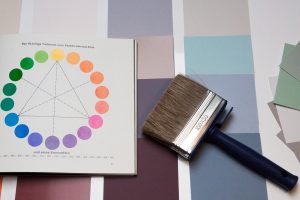
If you took any kind of art class in school than you are familiar with at least the basics of color theory, and the color wheel. The main purpose of the wheel is to show primary, secondary, and tertiary colors, and which colors pair well together.
There are six main areas of the color wheel that you will want to focus on when it comes to interior design, and they are:

- Complementary Colors: These are colors that are directly opposite one another on the wheel.
- Triads: Three colors forming a triangle such as red, yellow, and blue.
- Analogous Colors: These are colors that are right next to each other.
- Monochromatic Colors: One main color but with shades ranging from dark to light, or vice versa.
- Cool and Warm Colors: Color temperatures are often used to create a mood in a room. You may have also heard the use of cool and warm when it comes to skin tones.
- Non-Colors: While not found on the color wheel, these neutrals play a big role in interior design and they include grays, beiges, browns, whites, and blacks.
Again, this is a very brief explanation into color theory and there are complete courses on the topic. We just wanted to provide you with some basic knowledge so that you know what to keep in mind when choosing paint colors, as well as other décor you plan on bringing into a particular room.
The Importance of Color
As you can see, color plays a major role when it comes to interior design. Yes, you can always choose a color you prefer for any room in the house, but if you find you’re not sleeping well, then maybe you want to take a look at which colors are in your room.
It also plays a big part in the kitchen as well, and not just on the walls. Since there is no food that is naturally blue, eating off a blue plate will tend to limit the amount of food you eat as your brain doesn’t find it appealing.
When choosing colors, think of who the room is for and what the main function of the room is supposed to be. This is a good start to figuring out which colors might work best for you. Remember, if you feel overwhelmed you can always ask for help.